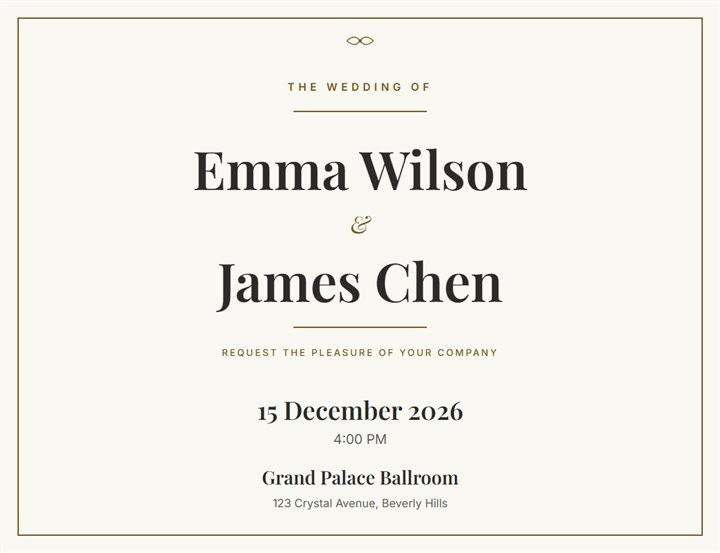
Couples usually ask this question backwards: "which is better," when the honest answer depends on what actually matters for a specific wedding. Here is what changes in practice, not in theory.
Timeline
Printed cards need to be designed, proofed, printed, and physically posted or hand-delivered, which usually means locking the guest list and venue weeks before you would otherwise need to. A digital invitation can go out the same day you finish it, and it can still be edited after guests already have the link if a venue or time changes. That matters more than the speed.
Knowing who is actually coming
This is the biggest practical difference and the one couples underestimate before their first wedding. A printed card has no way to tell you who has responded. You are calling or messaging each guest individually to ask, which for a 300-guest wedding is a real amount of work spread across weeks. A digital invitation with a built-in RSVP form gives you a live count as responses come in, so you know your numbers for catering and seating without chasing anyone.
Cost, honestly
Printed invitations cost per card: design, printing, and often postage, multiplied by your guest count, so the total scales with your guest list. A digital invitation is typically a single price regardless of how many guests you send it to, which changes the economics more for a larger wedding than a small one.
What paper still does better
It's worth being honest here: a physical card is still the right choice for a small circle of guests you want to hand something tangible to, like grandparents or close family, regardless of how the rest of your guest list is invited. Many couples do both: a digital invitation for the bulk of their guest list, with a handful of printed cards for the people they want to hand-deliver one to.
What actually determines RSVP response rates
The invitation format matters less here than how the invitation is sent. A link opened directly in a WhatsApp message, where a guest is already checking their phone daily, tends to get responded to faster than an email that sits unread, or a card that gets set down and forgotten. Bulava's invitations are built to open and share as a WhatsApp message specifically because that's where Indian wedding guests are already paying attention.